OneRouter Usage-Accounting
The Future of AI API Cost Management Through Usage-Accounting

Date
Nov 25, 2025
Author
Andrew Zheng
Preface: The Developer's Billing Dilemma
In the rapidly evolving landscape of AI application development, developers face a persistent and challenging problem: How to accurately and transparently bill end users for AI service consumption?
Picture this scenario: You've built an AI-powered writing assistant where each user request consumes varying amounts of tokens, but you have no precise visibility into the actual cost of each API call. Traditional billing approaches are either too crude or lack transparency, leaving developers caught between user satisfaction and sustainable pricing strategies.
OneRouter's latest billing feature release offers an exciting solution to this industry pain point that has long plagued AI service providers.
OneRouter Usage-Accounting: A Technical Breakthrough in Transparent Billing
Real-time Cost Visibility - Every Penny Accounted For
OneRouter now supports displaying cost and detailed breakdown information in every single API response. What does this mean for developers?
{
  "response": "AI-generated content for the user",
  "usage": {
    "prompt_tokens": 150,
    "completion_tokens": 200,
    "total_tokens": 350
  },
  "cost": {
    "total_cost": 0.0021,
    "currency": "USD",
    "breakdown": {
      "input_cost": 0.0009,
      "output_cost": 0.0012
    }
  }
}
Developers gain instant access to:
Precise token consumption metrics
Detailed cost breakdowns
Transparent billing foundations
Technical Advantages of Flexible Billing Models
1. True Pay-as-you-use Architecture
Traditional models often require developers to pre-purchase large credit pools, regardless of actual usage. OneRouter's usage-accounting enables genuine pay-per-use billing:
# Example: Dynamic billing based on actual usage
def calculate_user_charge(api_response):
    actual_cost = api_response['cost']['total_cost']
    markup_rate = 1.5  # 50% profit margin
    user_charge = actual_cost * markup_rate
    return user_charge
2. Tiered Pricing Strategy Implementation
With precise usage data, developers can implement intelligent pricing strategies:
Light users: Per-request billing with transparent cost display
Medium users: Monthly plans + overage billing
Heavy users: Enterprise-grade custom billing solutions
3. Cost Control & Budget Management
Real-time cost data empowers developers to:
Set usage budget limits for users
Provide cost alert functionality
Implement intelligent cost optimization recommendations
Developer's Perspective: Practical Value of Usage-Accounting
Enhanced User Trust
Transparency = Trust. When users can clearly see the cost breakdown of each AI interaction, they're more willing to pay for the service.
// Frontend cost breakdown display example
function displayCostBreakdown(costData) {
    return `
        <div class="cost-breakdown">
            <h4>Request Cost Details</h4>
            <p>Input Processing: $${costData.breakdown.input_cost}</p>
            <p>Output Generation: $${costData.breakdown.output_cost}</p>
            <p>Total: $${costData.total_cost}</p>
        </div>
    `;
}
Data-Driven Product Optimization
Precise usage data provides valuable insights for product enhancement:
High-cost operation identification: Which features consume the most tokens?
User behavior analysis: What are the usage patterns across different user segments?
Pricing strategy optimization: How to set the most reasonable price points?
Business Model Innovation
Usage-accounting unlocks new business model possibilities:
Hybrid SaaS Subscription + Usage-based Pricing
White-label Solutions
Provide complete billing infrastructure for enterprise clients, enabling them to bill their own customers.
Technical Implementation: Leveraging OneRouter's Billing Advantages
Integration Code Example
import requests
import json
from datetime import datetime

class OneRouterBilling:
    def __init__(self, api_key):
        self.api_key = api_key
        self.base_url = "https://llm.onerouter.pro"

    def make_request_with_billing(self, prompt, user_id):
        response = requests.post(
            f"{self.base_url}/chat/completions",
            headers={"Authorization": f"Bearer {self.api_key}"},
            json={"messages": [{"role": "user", "content": prompt}]}
        )

        result = response.json()

        # Record user usage
        self.record_usage(user_id, result['cost'])

        return result

    def record_usage(self, user_id, cost_data):
        # Record cost data to user billing system
        billing_record = {
            "user_id": user_id,
            "timestamp": datetime.now(),
            "cost": cost_data['total_cost'],
            "details": cost_data
        }
        # Store to database...

    def generate_user_invoice(self, user_id, period):
        # Generate detailed invoice with usage breakdown
        usage_records = self.get_usage_records(user_id, period)
        total_cost = sum([record['cost'] for record in usage_records])

        return {
            "user_id": user_id,
            "period": period,
            "total_requests": len(usage_records),
            "total_tokens": sum([record['details']['total_tokens'] for record in usage_records]),
            "total_cost": total_cost,
            "detailed_breakdown": usage_records
        }
Frontend User Interface Design
.usage-dashboard {
    background: linear-gradient(135deg, #667eea 0%, #764ba2 100%);
    border-radius: 15px;
    padding: 20px;
    color: white;
    box-shadow: 0 10px 30px rgba(0,0,0,0.2);
}

.cost-meter {
    display: flex;
    justify-content: space-between;
    align-items: center;
    margin: 15px 0;
    padding: 10px;
    background: rgba(255,255,255,0.1);
    border-radius: 10px;
}

.real-time-cost {
    font-size: 1.2em;
    font-weight: bold;
    color: #4CAF50;
}

.usage-chart {
    margin-top: 20px;
    background: white;
    border-radius: 10px;
    padding: 15px;
}
Competitive Advantage Analysis: OneRouter vs Traditional Solutions
Feature | Traditional AI APIs | OneRouter |
|---|---|---|
Cost Transparency | ❌ Black-box billing | ✅ Real-time cost display |
Billing Flexibility | ❌ Fixed packages only | ✅ Usage-based + diverse billing |
User Trust | ❌ Unclear costs | ✅ Complete transparency |
Development Complexity | ❌ Build billing system from scratch | ✅ Ready-to-use solution |
Business Model Innovation | ❌ Limited by provider constraints | ✅ Full pricing autonomy |
Cost Optimization | ❌ Manual guesswork | ✅ Data-driven decisions |
Compliance & Reporting | ❌ Limited audit trails | ✅ Comprehensive usage logs |
Advanced Use Cases: Maximizing Usage-Accounting Benefits
1. Multi-tenant SaaS Applications
class MultiTenantBilling:
    def __init__(self, onerouter_client):
        self.client = onerouter_client

    def process_tenant_request(self, tenant_id, user_id, request):
        # Make OneRouter request
        response = self.client.make_request_with_billing(request, user_id)

        # Apply tenant-specific markup
        tenant_config = self.get_tenant_config(tenant_id)
        markup_rate = tenant_config['markup_rate']

        final_cost = response['cost']['total_cost'] * markup_rate

        # Bill both tenant and end user
        self.bill_tenant(tenant_id, response['cost']['total_cost'])
        self.bill_end_user(user_id, final_cost)

        return response
2. Usage Analytics Dashboard
class UsageAnalytics {
    constructor() {
        this.charts = {};
    }

    displayUsageTrends(usageData) {
        const chartConfig = {
            type: 'line',
            data: {
                labels: usageData.dates,
                datasets: [{
                    label: 'Daily Cost ($)',
                    data: usageData.costs,
                    borderColor: '#4CAF50',
                    backgroundColor: 'rgba(76, 175, 80, 0.1)'
                }, {
                    label: 'Token Usage',
                    data: usageData.tokens,
                    borderColor: '#2196F3',
                    backgroundColor: 'rgba(33, 150, 243, 0.1)',
                    yAxisID: 'tokens'
                }]
            },
            options: {
                responsive: true,
                scales: {
                    y: {
                        type: 'linear',
                        display: true,
                        position: 'left',
                    },
                    tokens: {
                        type: 'linear',
                        display: true,
                        position: 'right',
                    }
                }
            }
        };

        return new Chart(document.getElementById('usageChart'), chartConfig);
    }
}
3. Predictive Cost Management
import numpy as np
from sklearn.linear_model import LinearRegression

class CostPredictor:
    def __init__(self):
        self.model = LinearRegression()

    def train_on_usage_history(self, usage_history):
        # Extract features: time of day, request complexity, user type
        features = []
        costs = []

        for record in usage_history:
            feature_vector = [
                record['hour'],
                record['prompt_length'],
                record['user_tier'],
                record['complexity_score']
            ]
            features.append(feature_vector)
            costs.append(record['cost'])

        self.model.fit(features, costs)

    def predict_request_cost(self, request_features):
        predicted_cost = self.model.predict([request_features])[0]
        return {
            'predicted_cost': predicted_cost,
            'confidence': self.calculate_confidence(request_features)
        }
Future Roadmap: Evolution of Usage-Accounting
1. AI Cost Prediction & Optimization
OneRouter can leverage historical data to provide cost prediction capabilities, helping developers better plan budgets and optimize usage patterns.
2. Intelligent Model Selection
Automatic recommendation of the most cost-effective model and parameter configurations based on usage patterns, maintaining quality while reducing costs.
3. Industry-Vertical Billing Solutions
Specialized billing templates and compliance frameworks for different industries (education, healthcare, finance, legal).
4. Carbon Footprint Tracking
Environmental impact tracking alongside cost metrics, supporting sustainability initiatives.
Real-World Success Stories
Case Study 1: AI Writing Platform
"After implementing OneRouter's usage-accounting, our user churn rate decreased by 35%. Users finally understood what they were paying for, and our transparent billing became a competitive advantage."
Result: 40% increase in user lifetime value
Key Metric: 99.2% billing dispute resolution rate
Case Study 2: Enterprise Document Analysis
"OneRouter's detailed cost breakdown allowed us to implement precise departmental charge-backs. Each department now has clear visibility into their AI usage costs."
Result: 25% reduction in unnecessary AI usage
Key Metric: 100% cost allocation accuracy
Conclusion: Embracing the Transparent Billing Era
OneRouter's Usage-accounting feature represents more than just a technical upgrade—it signifies a pivotal shift toward greater transparency, fairness, and flexibility in the AI services industry.
For developers, this translates to:
Enhanced Profitability - Precise billing enables better profit control
Stronger User Trust - Transparency builds lasting business relationships
Greater Innovation Space - Flexible billing models support diverse business model experimentation
Competitive Differentiation - Transparent pricing as a market advantage
In an era where AI applications are becoming ubiquitous, choosing OneRouter with Usage-accounting support means selecting not just a technical service, but a future-oriented business infrastructure that grows with your needs.
The question isn't whether transparent billing will become the standard—it's whether you'll be an early adopter who shapes the market or a late follower trying to catch up.
Experience OneRouter's transparent billing features today, and make every AI interaction truly worth its cost!
Ready to dive deeper into OneRouter's billing capabilities? Visit the OneRouter Official Documentation for comprehensive API references and integration guides.
Start building the future of transparent AI billing today.
Preface: The Developer's Billing Dilemma
In the rapidly evolving landscape of AI application development, developers face a persistent and challenging problem: How to accurately and transparently bill end users for AI service consumption?
Picture this scenario: You've built an AI-powered writing assistant where each user request consumes varying amounts of tokens, but you have no precise visibility into the actual cost of each API call. Traditional billing approaches are either too crude or lack transparency, leaving developers caught between user satisfaction and sustainable pricing strategies.
OneRouter's latest billing feature release offers an exciting solution to this industry pain point that has long plagued AI service providers.
OneRouter Usage-Accounting: A Technical Breakthrough in Transparent Billing
Real-time Cost Visibility - Every Penny Accounted For
OneRouter now supports displaying cost and detailed breakdown information in every single API response. What does this mean for developers?
{
  "response": "AI-generated content for the user",
  "usage": {
    "prompt_tokens": 150,
    "completion_tokens": 200,
    "total_tokens": 350
  },
  "cost": {
    "total_cost": 0.0021,
    "currency": "USD",
    "breakdown": {
      "input_cost": 0.0009,
      "output_cost": 0.0012
    }
  }
}
Developers gain instant access to:
Precise token consumption metrics
Detailed cost breakdowns
Transparent billing foundations
Technical Advantages of Flexible Billing Models
1. True Pay-as-you-use Architecture
Traditional models often require developers to pre-purchase large credit pools, regardless of actual usage. OneRouter's usage-accounting enables genuine pay-per-use billing:
# Example: Dynamic billing based on actual usage
def calculate_user_charge(api_response):
    actual_cost = api_response['cost']['total_cost']
    markup_rate = 1.5  # 50% profit margin
    user_charge = actual_cost * markup_rate
    return user_charge
2. Tiered Pricing Strategy Implementation
With precise usage data, developers can implement intelligent pricing strategies:
Light users: Per-request billing with transparent cost display
Medium users: Monthly plans + overage billing
Heavy users: Enterprise-grade custom billing solutions
3. Cost Control & Budget Management
Real-time cost data empowers developers to:
Set usage budget limits for users
Provide cost alert functionality
Implement intelligent cost optimization recommendations
Developer's Perspective: Practical Value of Usage-Accounting
Enhanced User Trust
Transparency = Trust. When users can clearly see the cost breakdown of each AI interaction, they're more willing to pay for the service.
// Frontend cost breakdown display example
function displayCostBreakdown(costData) {
    return `
        <div class="cost-breakdown">
            <h4>Request Cost Details</h4>
            <p>Input Processing: $${costData.breakdown.input_cost}</p>
            <p>Output Generation: $${costData.breakdown.output_cost}</p>
            <p>Total: $${costData.total_cost}</p>
        </div>
    `;
}
Data-Driven Product Optimization
Precise usage data provides valuable insights for product enhancement:
High-cost operation identification: Which features consume the most tokens?
User behavior analysis: What are the usage patterns across different user segments?
Pricing strategy optimization: How to set the most reasonable price points?
Business Model Innovation
Usage-accounting unlocks new business model possibilities:
Hybrid SaaS Subscription + Usage-based Pricing
White-label Solutions
Provide complete billing infrastructure for enterprise clients, enabling them to bill their own customers.
Technical Implementation: Leveraging OneRouter's Billing Advantages
Integration Code Example
import requests
import json
from datetime import datetime

class OneRouterBilling:
    def __init__(self, api_key):
        self.api_key = api_key
        self.base_url = "https://llm.onerouter.pro"

    def make_request_with_billing(self, prompt, user_id):
        response = requests.post(
            f"{self.base_url}/chat/completions",
            headers={"Authorization": f"Bearer {self.api_key}"},
            json={"messages": [{"role": "user", "content": prompt}]}
        )

        result = response.json()

        # Record user usage
        self.record_usage(user_id, result['cost'])

        return result

    def record_usage(self, user_id, cost_data):
        # Record cost data to user billing system
        billing_record = {
            "user_id": user_id,
            "timestamp": datetime.now(),
            "cost": cost_data['total_cost'],
            "details": cost_data
        }
        # Store to database...

    def generate_user_invoice(self, user_id, period):
        # Generate detailed invoice with usage breakdown
        usage_records = self.get_usage_records(user_id, period)
        total_cost = sum([record['cost'] for record in usage_records])

        return {
            "user_id": user_id,
            "period": period,
            "total_requests": len(usage_records),
            "total_tokens": sum([record['details']['total_tokens'] for record in usage_records]),
            "total_cost": total_cost,
            "detailed_breakdown": usage_records
        }
Frontend User Interface Design
.usage-dashboard {
    background: linear-gradient(135deg, #667eea 0%, #764ba2 100%);
    border-radius: 15px;
    padding: 20px;
    color: white;
    box-shadow: 0 10px 30px rgba(0,0,0,0.2);
}

.cost-meter {
    display: flex;
    justify-content: space-between;
    align-items: center;
    margin: 15px 0;
    padding: 10px;
    background: rgba(255,255,255,0.1);
    border-radius: 10px;
}

.real-time-cost {
    font-size: 1.2em;
    font-weight: bold;
    color: #4CAF50;
}

.usage-chart {
    margin-top: 20px;
    background: white;
    border-radius: 10px;
    padding: 15px;
}
Competitive Advantage Analysis: OneRouter vs Traditional Solutions
Feature | Traditional AI APIs | OneRouter |
|---|---|---|
Cost Transparency | ❌ Black-box billing | ✅ Real-time cost display |
Billing Flexibility | ❌ Fixed packages only | ✅ Usage-based + diverse billing |
User Trust | ❌ Unclear costs | ✅ Complete transparency |
Development Complexity | ❌ Build billing system from scratch | ✅ Ready-to-use solution |
Business Model Innovation | ❌ Limited by provider constraints | ✅ Full pricing autonomy |
Cost Optimization | ❌ Manual guesswork | ✅ Data-driven decisions |
Compliance & Reporting | ❌ Limited audit trails | ✅ Comprehensive usage logs |
Advanced Use Cases: Maximizing Usage-Accounting Benefits
1. Multi-tenant SaaS Applications
class MultiTenantBilling:
    def __init__(self, onerouter_client):
        self.client = onerouter_client

    def process_tenant_request(self, tenant_id, user_id, request):
        # Make OneRouter request
        response = self.client.make_request_with_billing(request, user_id)

        # Apply tenant-specific markup
        tenant_config = self.get_tenant_config(tenant_id)
        markup_rate = tenant_config['markup_rate']

        final_cost = response['cost']['total_cost'] * markup_rate

        # Bill both tenant and end user
        self.bill_tenant(tenant_id, response['cost']['total_cost'])
        self.bill_end_user(user_id, final_cost)

        return response
2. Usage Analytics Dashboard
class UsageAnalytics {
    constructor() {
        this.charts = {};
    }

    displayUsageTrends(usageData) {
        const chartConfig = {
            type: 'line',
            data: {
                labels: usageData.dates,
                datasets: [{
                    label: 'Daily Cost ($)',
                    data: usageData.costs,
                    borderColor: '#4CAF50',
                    backgroundColor: 'rgba(76, 175, 80, 0.1)'
                }, {
                    label: 'Token Usage',
                    data: usageData.tokens,
                    borderColor: '#2196F3',
                    backgroundColor: 'rgba(33, 150, 243, 0.1)',
                    yAxisID: 'tokens'
                }]
            },
            options: {
                responsive: true,
                scales: {
                    y: {
                        type: 'linear',
                        display: true,
                        position: 'left',
                    },
                    tokens: {
                        type: 'linear',
                        display: true,
                        position: 'right',
                    }
                }
            }
        };

        return new Chart(document.getElementById('usageChart'), chartConfig);
    }
}
3. Predictive Cost Management
import numpy as np
from sklearn.linear_model import LinearRegression

class CostPredictor:
    def __init__(self):
        self.model = LinearRegression()

    def train_on_usage_history(self, usage_history):
        # Extract features: time of day, request complexity, user type
        features = []
        costs = []

        for record in usage_history:
            feature_vector = [
                record['hour'],
                record['prompt_length'],
                record['user_tier'],
                record['complexity_score']
            ]
            features.append(feature_vector)
            costs.append(record['cost'])

        self.model.fit(features, costs)

    def predict_request_cost(self, request_features):
        predicted_cost = self.model.predict([request_features])[0]
        return {
            'predicted_cost': predicted_cost,
            'confidence': self.calculate_confidence(request_features)
        }
Future Roadmap: Evolution of Usage-Accounting
1. AI Cost Prediction & Optimization
OneRouter can leverage historical data to provide cost prediction capabilities, helping developers better plan budgets and optimize usage patterns.
2. Intelligent Model Selection
Automatic recommendation of the most cost-effective model and parameter configurations based on usage patterns, maintaining quality while reducing costs.
3. Industry-Vertical Billing Solutions
Specialized billing templates and compliance frameworks for different industries (education, healthcare, finance, legal).
4. Carbon Footprint Tracking
Environmental impact tracking alongside cost metrics, supporting sustainability initiatives.
Real-World Success Stories
Case Study 1: AI Writing Platform
"After implementing OneRouter's usage-accounting, our user churn rate decreased by 35%. Users finally understood what they were paying for, and our transparent billing became a competitive advantage."
Result: 40% increase in user lifetime value
Key Metric: 99.2% billing dispute resolution rate
Case Study 2: Enterprise Document Analysis
"OneRouter's detailed cost breakdown allowed us to implement precise departmental charge-backs. Each department now has clear visibility into their AI usage costs."
Result: 25% reduction in unnecessary AI usage
Key Metric: 100% cost allocation accuracy
Conclusion: Embracing the Transparent Billing Era
OneRouter's Usage-accounting feature represents more than just a technical upgrade—it signifies a pivotal shift toward greater transparency, fairness, and flexibility in the AI services industry.
For developers, this translates to:
Enhanced Profitability - Precise billing enables better profit control
Stronger User Trust - Transparency builds lasting business relationships
Greater Innovation Space - Flexible billing models support diverse business model experimentation
Competitive Differentiation - Transparent pricing as a market advantage
In an era where AI applications are becoming ubiquitous, choosing OneRouter with Usage-accounting support means selecting not just a technical service, but a future-oriented business infrastructure that grows with your needs.
The question isn't whether transparent billing will become the standard—it's whether you'll be an early adopter who shapes the market or a late follower trying to catch up.
Experience OneRouter's transparent billing features today, and make every AI interaction truly worth its cost!
Ready to dive deeper into OneRouter's billing capabilities? Visit the OneRouter Official Documentation for comprehensive API references and integration guides.
Start building the future of transparent AI billing today.
More Articles
The difference cache performance between Google Vertex and AI Studio
The Curious Case of Cache Misses: A Deep Dive into Google's Dual Gateway Mystery
The difference cache performance between Google Vertex and AI Studio
The Curious Case of Cache Misses: A Deep Dive into Google's Dual Gateway Mystery
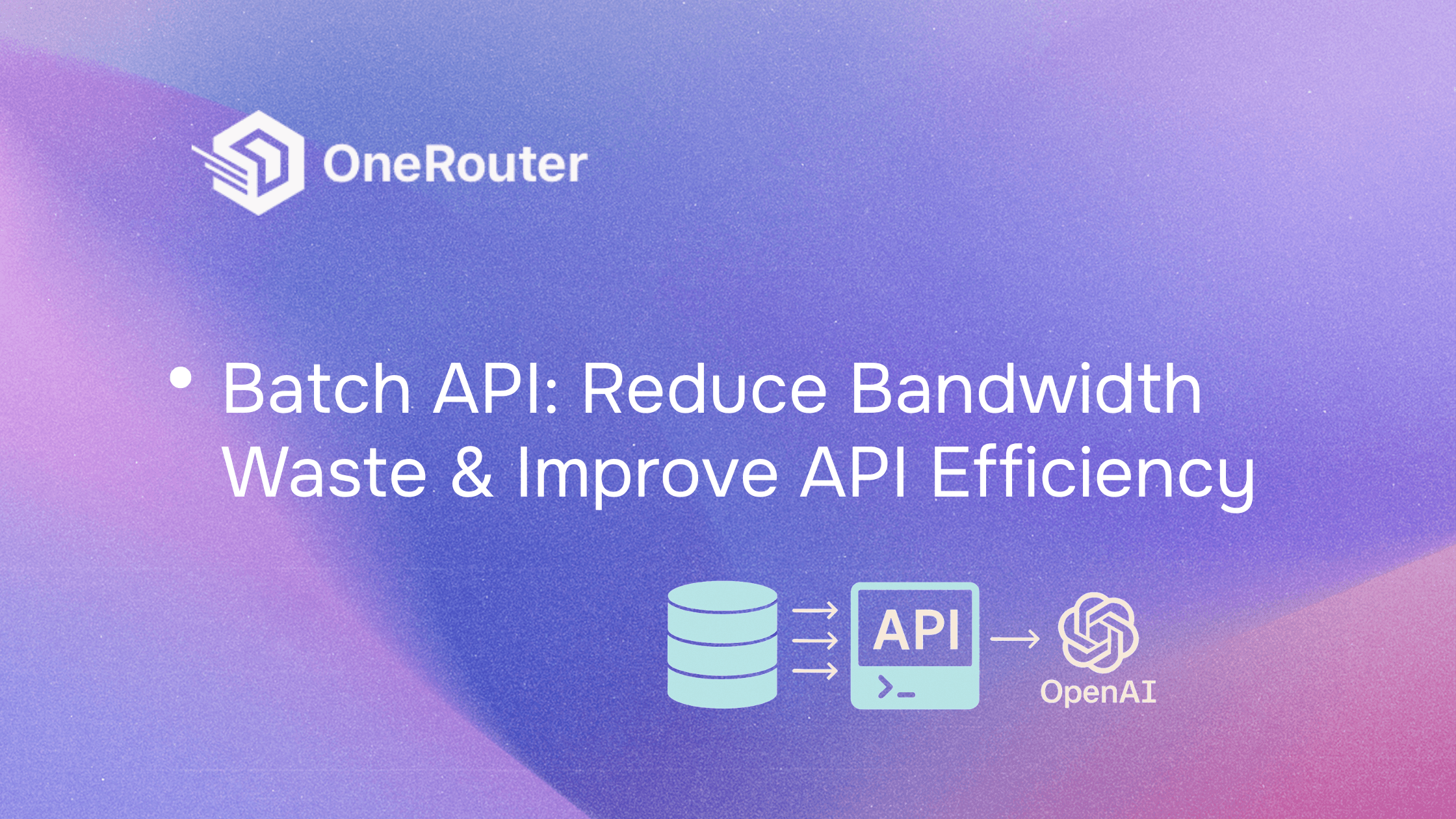
OneRouter Batch API
Batch API: Reduce Bandwidth Waste and Improve API Efficiency
OneRouter Batch API
Batch API: Reduce Bandwidth Waste and Improve API Efficiency

Claude vs. ChatGPT
Claude vs. ChatGPT: Who Is Your Ultimate Intelligent Assistant?
Claude vs. ChatGPT
Claude vs. ChatGPT: Who Is Your Ultimate Intelligent Assistant?
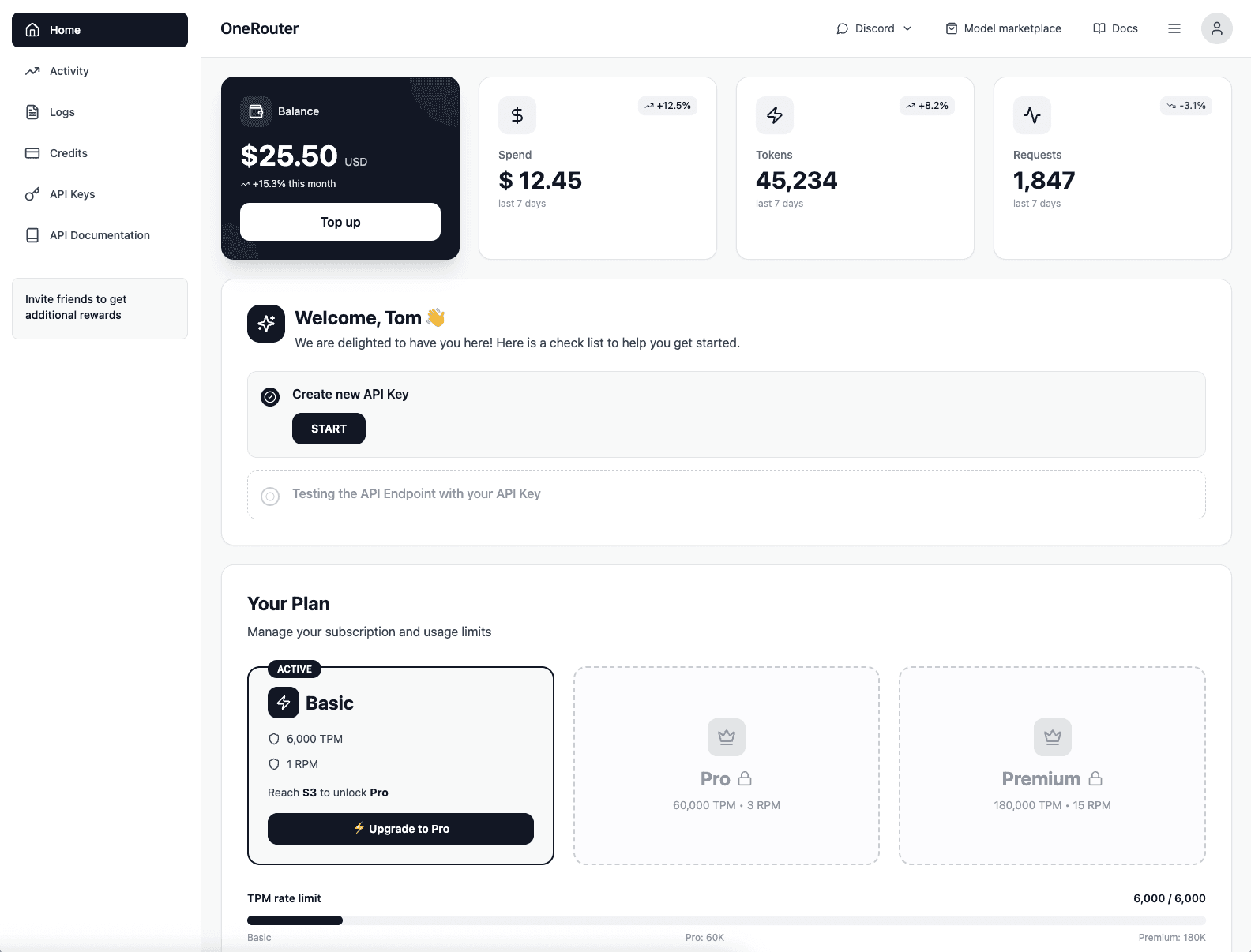
Scale without limits
Seamlessly integrate OneRouter with just a few lines of code and unlock unlimited AI power.
Scale without limits
Seamlessly integrate OneRouter with just a few lines of code and unlock unlimited AI power.
Scale without limits
Seamlessly integrate OneRouter with just a few lines of code and unlock unlimited AI power.